From Chemistry Passion to Clinical Impact: How CROs Must Evolve to Power the Next Generation of Biotech Innovation
In an industry defined by complexity, regulation, and scientific precision, the future often belongs to those who can make the difficult look simple. But simplicity is never accidental; it is engineered. It grows out of experience, curiosity, discipline, and the willingness to evolve faster than the challenges that surround us.
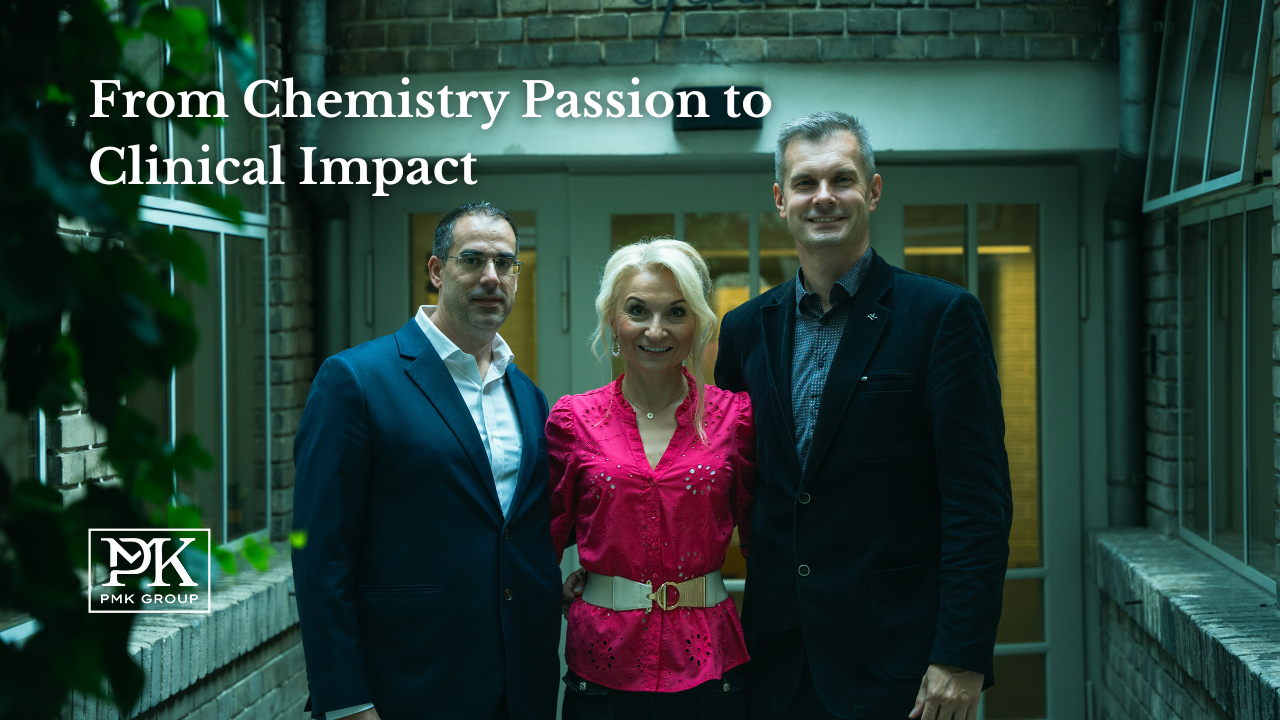
Few embody this arc of evolution better than Jiri Raska, Chief Commercial Officer of Quinta Analytica, a Czech-based CRO with deep scientific roots and an increasingly global footprint. His personal journey from a young chemistry enthusiast at age fifteen to a commercial leader shaping the direction of a multinational CRO mirrors the transformation the CRO industry itself is undergoing.
Our industry stands at a defining moment. Small and mid-sized biotechs, the lifeblood of therapeutic innovation, are under unprecedented pressure. Funding cycles tighten, clinical expectations grow more complex, and regulatory frameworks evolve faster than internal expertise can keep up. What these companies need is not simply a vendor. They need a partner: one who understands their science, anticipates their constraints, and shares their urgency.
In conversations like the one I had with Jiri, a clear message emerges: CROs must evolve from service providers into strategic enablers or risk becoming irrelevant. Quinta Analytica is one of the organizations demonstrating what that evolution looks like.
This article explores four themes shaping that future:
The rise of biologics and the end of Europe’s generic era.
Bioequivalence studies under regulatory pressure and how Europe regains competitiveness.
Why small biotech companies are the industry’s greatest opportunity (and its greatest challenge).
The next frontier: ADCs, personalized medicine, and the science-business interface.
The Rise of Biologics and the End of Europe’s Generic Era
When you ask Jiri which area dominates their service demand today, the answer is immediate: biologics and biosimilars.
Europe is approaching what many now call the “biologics patent cliff void,” a flood of high-value biologics going off-patent without adequate biosimilar competition in the pipeline. Roughly 90% of biologics nearing patent expiry lack biosimilar replacements, leaving a multibillion-dollar gap and an enormous opportunity.
For CROs, this structural shift changes everything.
While small molecules once represented a stable, predictable backbone of analytical and clinical activity, that era, particularly in Europe, has largely ended. As Jiri put it:
“The era of pure generics in Europe is gone.”
Cost pressure, market saturation, and payer dynamics have driven generic development to lower-cost regions such as India, Jordan, and parts of Southeast Asia. What remains in Europe is more sophisticated: value-added generics, complex formulations, and specialized bioequivalence challenges that require deep scientific know-how, not just capacity.
Biologics, on the other hand, are accelerating. Biosimilar PK studies, characterization analytics, method development, and impurity profiling now dominate CRO pipelines. And within that landscape, nitrosamines have become a defining challenge, a perfect example of how science and regulation collide.
Detecting nitrosamines at single-digit parts per billion is not just technical difficulty; it’s artistry. It demands mastery of LC-MS, method development, and analytical problem-solving that only a handful of organizations possess.
This is where companies like Quinta Analytica shine. Their heritage in deep analytical chemistry and their founder’s reputation as one of the top LC-MS experts in the region position them uniquely well to deliver the precision modern programs require.
In an era defined by biologics, analytical excellence is no longer optional; it is the differentiator.
Bioequivalence Studies Under Pressure: How Europe Regains Competitiveness
Clinical studies, specifically PK and bioequivalence studies, represent one of the most dynamic areas in today’s CRO landscape. But here too, the paradigm has shifted. For years, Europe lagged behind countries like Canada and Australia, where regulatory approval times can be as short as two weeks, supported by streamlined documentation requirements.
Contrast that with Europe’s transition to the CTIS (Clinical Trial Information System), which initially caused delays of up to four months for a typical bioequivalence study.
For CROs and sponsors alike, time is not just money; it’s survival. A four-month delay can burn a startup’s cash runway, derail investor confidence, and push back market entry by years.
But here is where leadership and persistence matter.
Jiri and his team worked closely with Czech authorities to re-establish an efficient, predictable pathway. Today, a well-prepared submission in the Czech Republic can be approved in 25–26 days, putting the region back into a competitive position, particularly for single-country, single-center studies.
This matters enormously for startups and emerging biotechs, where:
Cash burn must be minimized.
Speed to first-in-human is existential.
Operational complexity must remain low.
Predictable timelines attract investors.
Central Europe, especially Czechia and Hungary, is re-emerging as a competitive clinical research hub. When regulatory frameworks align with high-quality clinical operations, the result is a rare combination: speed and trust.
And trust, especially in clinical data integrity, is what keeps Europe on the map.
As Jiri reminded us:
“For difficult bioequivalence studies, many companies still prefer Europe because they want to be 120% sure about the integrity of the data.”
In a world where the FDA can knock on your door “any day without invitation,” that integrity is priceless.
The Small Biotech Paradox: CROs’ Biggest Opportunity and Their Hardest Challenge
Every CRO dreams of landing contracts with multinationals. Yet many who have tried understand the paradox: while big pharma is attractive, the pathway to collaboration is bureaucratic, slow, and price-sensitive.
Small and mid-sized biotechs are often more strategic partners. They value speed, flexibility, and scientific partnership over rigid procurement cycles. They prefer fewer partners who can do more, a model that favors integrated CROs like Quinta Analytica.
This is where Jiri is most passionate. Helping a company evolve from analytical development to method validation, into release testing, and ultimately into clinical PK studies is the arc of partnership that builds real impact.
He describes it beautifully:
“When you help them in development and see them progress from Phase 1 to Phase 2, you feel that what you’re doing truly makes sense.”
But the small biotech segment has its challenges.
Startups often lack:
Internal regulatory expertise.
Vendor management experience.
Project management resources.
Continuous funding to support timelines.
The result is a recurring pattern: CROs submit proposals, spend weeks estimating costs and timelines, only to hear:
“Perfect. Now we just need to wait one year to secure funding.”
This is the startup paradox: enormous promise paired with unavoidable uncertainty.
Forward-looking CROs are addressing this by creating Customer Success Manager roles that bridge business development and operations. This ensures that:
Communication remains consistent.
The client never has to repeat themselves.
Internal handovers do not cause delays.
Expectations stay aligned across teams.
In an industry where trust is built in the micro-moments between projects, this human-centered approach is not fashionable; it is necessary.
The Next Frontier: ADCs, Personalized Medicine, and Scientific Integration
Looking ahead, where should CROs invest? Where should biotechs place their bets?
Three clear frontiers emerge from our discussion.
a) Antibody-Drug Conjugates (ADCs)
ADCs represent one of the fastest-growing segments of modern therapeutics. They sit at the intersection of biologics and small molecules, requiring CROs that excel in both.
Testing ADCs is uniquely complex and demanding:
Deep characterization of the biologic backbone.
Precise quantification of cytotoxic payloads.
Method development that integrates two molecular worlds.
Most CROs excel in one domain or the other. Few excel in both. This makes ADC capabilities a strategic advantage and a market differentiator.
b) Personalized Medicine and 2D/3D Printing
While personalized medicine often feels like the future perpetually “five years away,” early adopters are already experimenting with technologies such as:
2D printed oral dispersible films.
3D printed personalized tablets.
QR-coded pharmaceuticals that integrate dosing and patient education.
The science is ready. The regulation and reimbursement models are not. But once regulatory frameworks mature, as we have seen in the U.S., Europe will accelerate quickly.
CROs that begin developing the analytical and formulation capabilities now will be the leaders when the wave breaks.
c) Integrated Formulation, Analytics, and Clinical Execution
Quinta’s integration into the Conscio Group, bringing formulation development under the same umbrella, is more than corporate restructuring. It’s a signal of where the industry is going:
End-to-end support from formulation to release to clinical analysis is now expected.
Not because CROs should claim to be “one-stop shops,” but because fragmentation slows innovation and drains the resources of small biotechs. Integrated workflows restore speed and reduce risk.
The CRO of the Future Is Not a Vendor, It Is a Catalyst
The story of Jiri Raska is not just the story of one professional. It is the story of an industry undergoing profound transformation.
A chemist who once lived in the precision of the laboratory now leads commercial strategy for a multinational CRO. Yet he carries with him the mindset that makes great science and great partnerships possible:
curiosity
rigor
transparency
and an unwavering commitment to quality
As biotech innovation becomes more interdisciplinary, more global, and more financially constrained, CROs capable of combining scientific depth with operational agility will define the next decade.
Biologics, ADCs, and personalized therapeutics are not just scientific trends; they are invitations. Invitations for CROs to grow beyond the transactional and step into the strategic.
For startups, the message is equally clear:
Choose partners, not vendors. Choose those who grow with you, not just those who invoice you.
And for CROs, the challenge is simple:
Become the partner you wish you had when the stakes were highest.
Jiri’s journey and Quinta Analytica’s evolution offer a blueprint. The future belongs to organizations that mirror the best qualities of the molecules they analyze: precise, adaptable, high-performing, and built for impact.
Dr. Peter M. Kovacs